
Illinois Arrest Log Landscape
No statewide rule applies in Illinois. No rule forces every county to publish weekend bookings or keep a public arrest log for a set number of days. Nor does one state feed combine all county and municipal arrests. A single log may cover one police department or a sheriff's office. It may also span one city, a newspaper's reporting area, or a chosen date span. The label matters here. A custody roster answers who is held right now. An arrest log records selected events. A dispatch log records calls for service. Booking itself is the jail intake step that follows an arrest.
A multi-day report can include events after a daily view has rolled over. Even so, it does not confirm booking, present custody, or any court result. The arresting agency, the jail, and the court may each hold separate records. Those records can concern the same person.
Official Illinois Arrest-Log Channels
The table puts public agency examples first, followed by one regional newspaper blotter.
| Source | Record and window | Scope to keep in mind |
|---|---|---|
| Rockford Police | Approved adult-arrest log for the last seven days | Municipal coverage only. Sensitive or narcotics material may be held for up to 72 hours under the department’s release rules. |
| Winnebago County data | 72-hour dispatch call log, refreshed hourly | Calls for service, with sensitive calls suppressed. It is not proof of an arrest or booking. |
| Evanston Police | Daily crime reports | Municipal police reporting, not a countywide jail roster. |
| Dixon Police | Police blotter | Use the agency’s own posted dates and descriptions to understand the log’s scope. |
| Illinois State Police | News releases and selected enforcement reports | Agency news is not a daily list of all ISP arrests or county bookings. |
| Taylorville Daily News | Regional newspaper police blotter | Editorial coverage may be selective or delayed; it is not an official roster. |
Rockford's log is municipal, not a Winnebago-wide jail feed. A city arrest can lead to a county detention facility. Yet the city log reflects its own release rules. These records answer different questions.
Illinois State Police news releases describe selected cases or enforcement activity. They do not cover every ISP arrest or county booking. When a release names a receiving jail, the county's official source is the place to check. It shows current custody. The ISP newsroom index shows the agency's published release list, which can add context to a multi-day investigation.
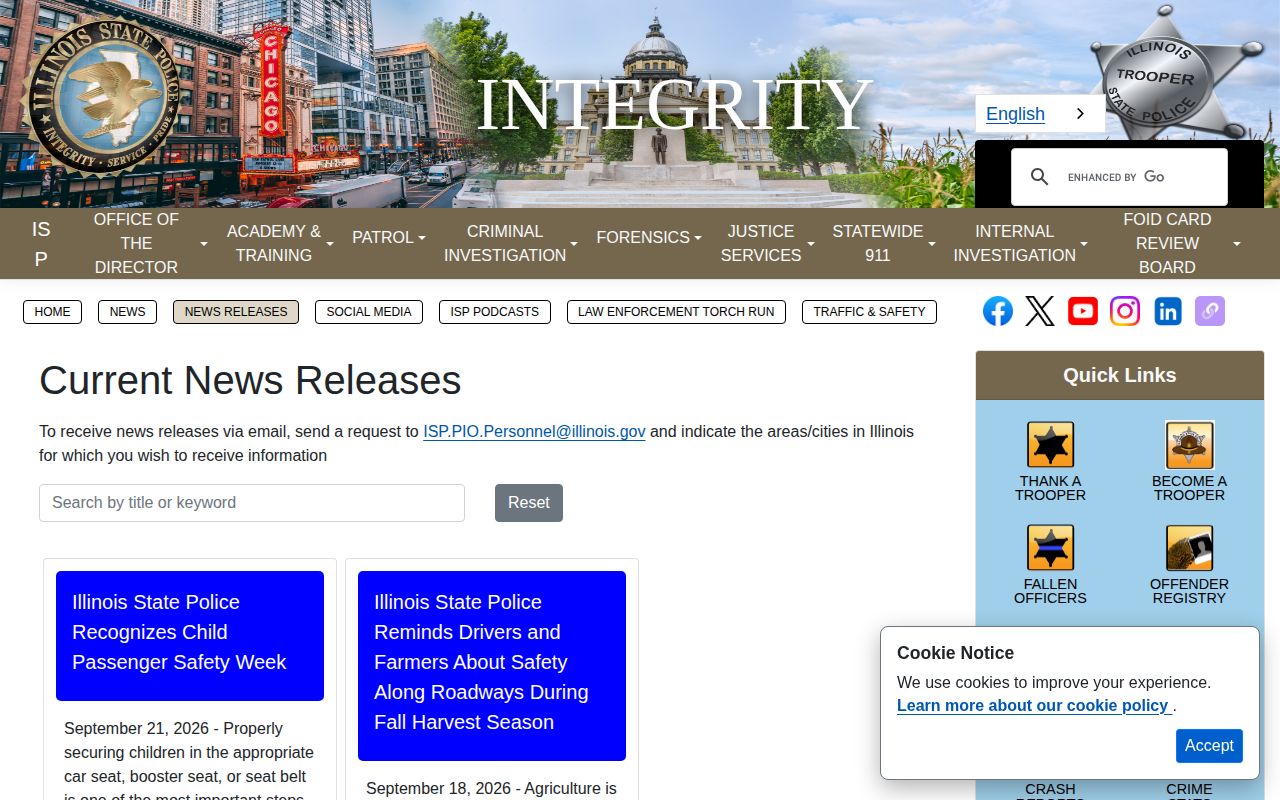
Each dated entry is an official agency communication rather than a daily booking list or a full state-police activity log. The Central Illinois multi-day enforcement release offers one bounded example of results the agency chose to announce.
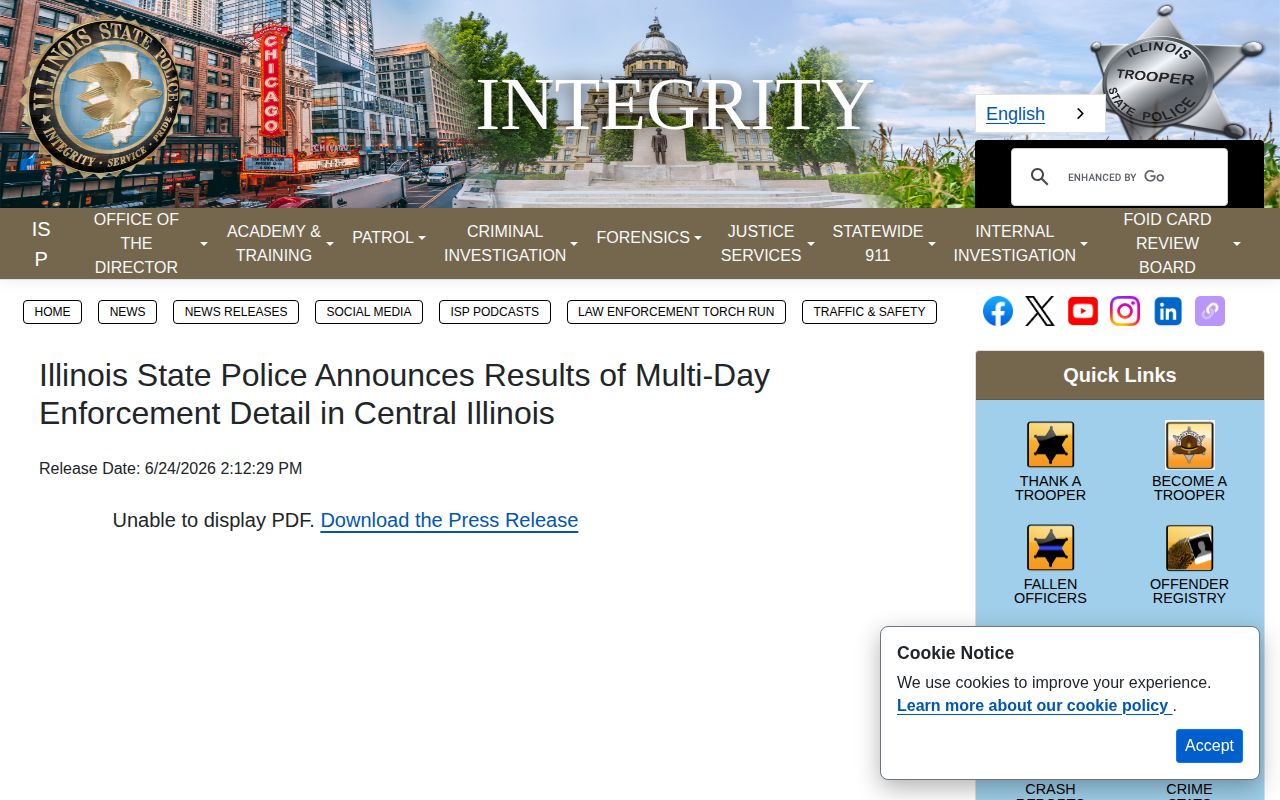
Its operation dates and area belong to that release alone. They do not define the period or geography of other state and county records.
Note: A source’s stated window is the limit of that publication, not a promise that the same data exists in another system.
Dispatch Calls Are Not Bookings
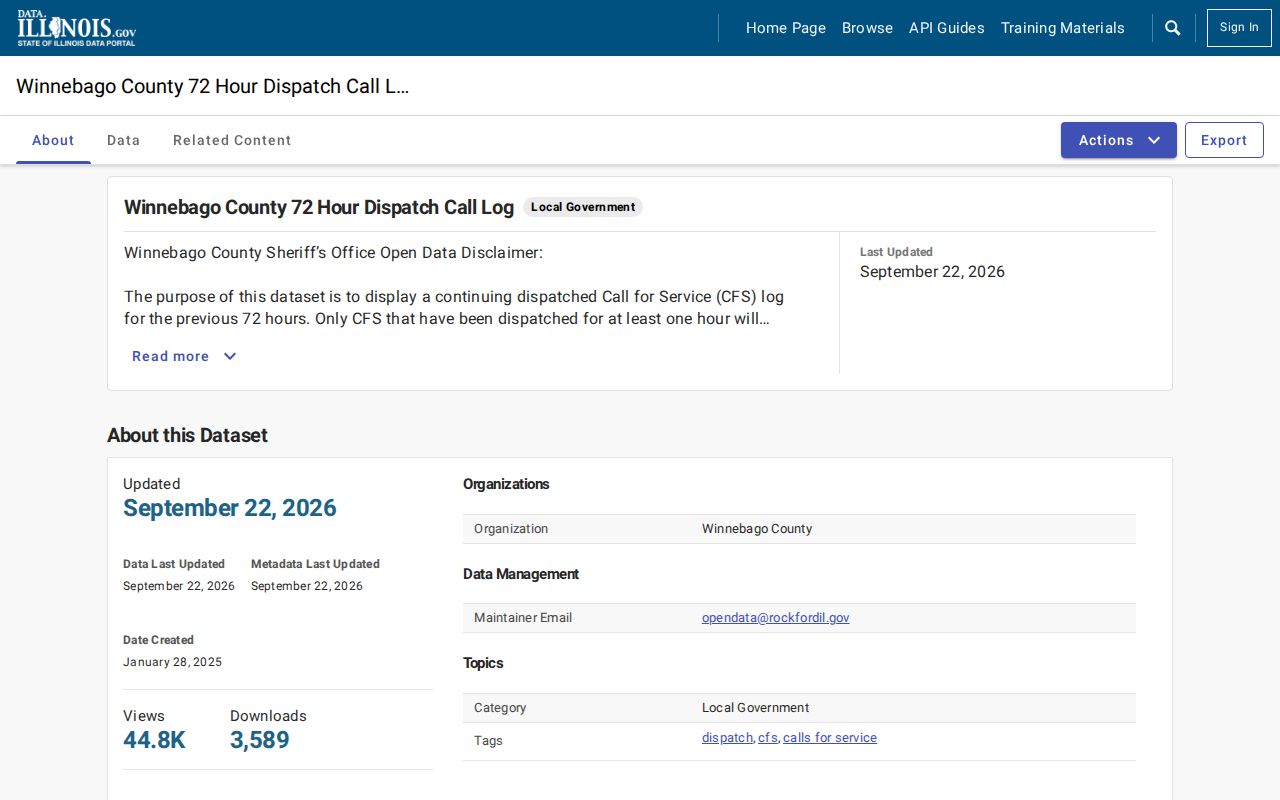
Dispatch records log calls for service or other activity. A call may never lead to an arrest, charge, or jail intake. Winnebago County's official 72-hour dataset refreshes hourly. It suppresses sensitive calls. Even so, it does not confirm booking. The official dataset listing identifies the resource as dispatch activity, not a named booking roster.
A blotter serves a different purpose. It may summarize police reports or arrests an agency chooses to publish, while a booking roster tracks people in custody at a given point. Check whether an entry gives an arrest date, report date, booking status, or only a call type before comparing it with another source.
What Illinois Arrest-Log Entries Show
Illinois arrest-log entries follow no single field set. Some local reports name the person and alleged offense. Others focus on the incident, the reporting agency, or the event date. The same field can even mean different things in different systems, so read the source label and any posted data notes first.
| Field, if shown | What it may tell you | What it cannot establish alone |
|---|---|---|
| Date or time | When an incident, arrest, or report was recorded | That the person was booked at that same time |
| Name, age, or community | Who the agency or outlet says is connected to the entry | Identity beyond the source’s own record or a final court result |
| Agency or location | Which department handled or reported the event | That the event belongs to every city or county roster |
| Charge or narrative | The charge or brief report known when the entry was made | Guilt, a final charge, or the final case result |
| Custody or booking detail | Whether the source links an event to jail intake or current custody | Current custody if the entry is old or the roster has changed |
| Photo | An image the source chose or was able to publish | A statewide photo policy or a complete arrest record |
Charge text at arrest can change. A case may also be dismissed or resolved in a way the first log never shows. Use the court or agency record for later status. Do not treat a missing photo or custody field as proof that no record exists.
Section 2.15 of the Illinois FOIA describes core arrest information. It does not prescribe one local log format. The official statute page sets the statewide fields and timing standard.
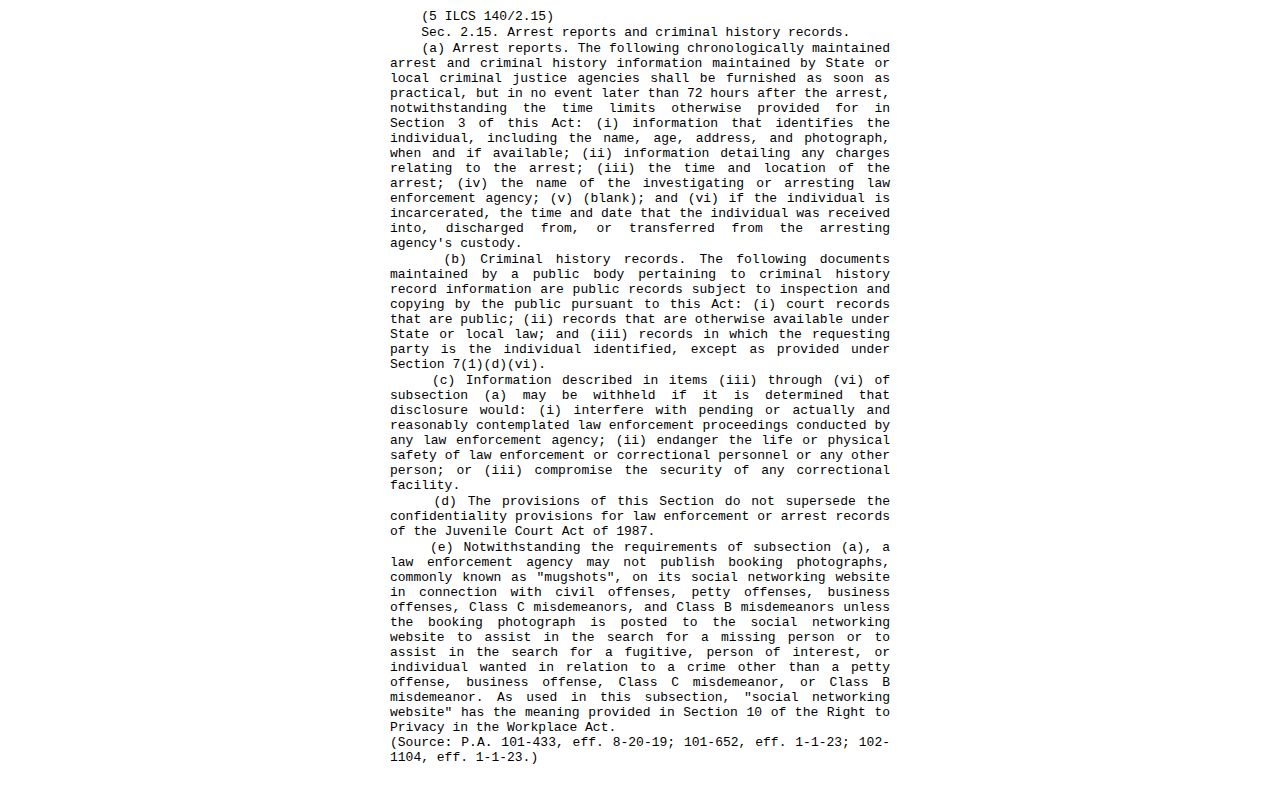
Use the statute as an access baseline. Then read each log's own source notes to learn what its entries mean.
Illinois News Arrest Blotters
Illinois newspapers and broadcasters publish selected arrest and crime coverage, not complete booking rolls. The Chicago Sun-Times crime desk, Chicago Tribune criminal-justice coverage, and WGN's Chicago crime reports concentrate on the Chicago area and major cases. Shaw Local covers many suburban and regional communities. Capitol News Illinois reports on statewide public affairs, courts, and criminal-justice policy rather than live custody. Regional reports also appear through WGEM, WAND, WCIA, and 25 News Now. Reach and archive depth vary by market.
News is editorial and selective. A report can arrive after the event, omit people deemed not newsworthy, or remain online after a charge is dismissed. Check the article date, named agency, court status, and the outlet's correction route. A newspaper account is never a live custody check.
Commercial arrest indexes are secondary too. RecentlyBooked's Illinois page describes a 30-day window but lists only some counties. Arrests.org's Illinois section shows selected county coverage and a short summary, and its disclaimer makes no accuracy claim. Mugshots.com's Illinois pages hold historical material, not current custody status. Verify any lead with the original agency, jail, or court.
Note: A news or aggregator result is a lead for verification, not an official statement of current custody.
Finding Illinois County Arrest Logs
Location comes first. An arrest happens in one place, and that place decides where the log lives. Next figure out who holds it. That may be a sheriff, a town police department, a state agency, a dispatch center, or a newsroom. The Illinois County Directory can point a search toward the right local jurisdiction. Keep one limit in mind. A town police log may cover only that department, even when the county runs the jail.
- Set the location. Identify the city or county and whether the arresting agency was municipal or county.
- Choose the record type. Open the agency’s arrest log or blotter for published arrests, a dispatch log for calls, or a custody roster for people held now.
- Read the date labels. Separate the incident date, arrest date, report date, and posting date. A multi-day view may show one or more of these, not all four.
- Check the stated window. Check the oldest entry, update note, archive link, and stated delay or suppression rule.
- Confirm booking or status. For a current custody question, compare the entry with the receiving jail’s roster or records unit. The Illinois 24 Hour Arrests page describes the separate same-day sources and their limits.
Sometimes the public log stops short of the date you need. That gap is not a dead end. Ask the record-holding agency directly. It can say which office keeps the arrest report, the booking record, or the dispatch entry. Give a narrow date range and name the record type you want. A blotter search can locate an event. The underlying custodian remains the source for a copy or a confirmed disposition.
Weekend and Holiday Posting
Weekends and holidays shape when logs appear. Illinois imposes no rule about it. A newspaper may bunch Friday-through-Sunday arrests into one Monday report, while a county PDF shows up the next morning instead. Each format behaves differently. A seven-day municipal log can roll forward, an hourly dispatch feed may suppress sensitive calls, and a custody roster can drop an entry after release or transfer.
Line up three dates: the event, the report, and the publication. Missing entry? Check the agency's update note first. Then contact its records custodian once the stated window passes. For current custody questions, the county's official roster or records line is the right tool. Archive depth varies too. A seven-day view may not persist, and a newspaper archive may omit some reports. The agency's own retention schedule governs its records.
Illinois Arrest-Log Archives
Online history takes many forms. One county posts a live page with no visible past entries. Another publishes a daily PDF, a rolling seven-day log, or an aging newspaper archive. A third-party item about an arrest can outlive the official source. Age alone does not make it current. A roster row that disappears is not proof of dismissal or record destruction. An old web item is not proof of present custody either. For real history, two state institutions help. The Illinois State Archives and the Illinois Regional Archives Depository (IRAD) hold selected historical county records, including jail registers and court files. They do not hold live rosters or a modern photo database. The Archives' sheriff-records description notes that registers may list name, sex, age, height, eyes and hair, birthplace, marks, commitment, offense, and release. Photos may be absent entirely. Access can be limited by age, juvenile status, sealed records, donor rules, or missing indexes. Start with the agency's own series. Ask whether its date range survives. Then check Archives holdings or IRAD. The resident reference request allows two specific names and may return an index or an uncertified copy. Its instructions list a $10 prepaid, nonrefundable out-of-state research fee covering up to two copies. Confirm current terms before sending payment. Modern public records follow local retention schedules. Local agencies need Local Records Commission approval before disposal. Illinois sets no statewide online-retention period for booking photos. Ask the custodian for its approved schedule. Request the Application for Authority to Dispose and any disposition certificate. Request each record by type, since different offices may hold the arrest report, booking sheet, booking photo, jail image, dispatch record, and web copy for different periods.
Note: A targeted request should name the agency, record type, and date span, then ask whether an index, scan, or copy survives.