
Illinois Recent Arrests
Illinois recent arrests live in many places, not one. No single official roster covers the whole state. The paper trail spreads across local police, the county jail that receives a person, the circuit clerk, Illinois State Police, the Illinois Department of Corrections, VINE, and federal custody systems. Each answers a different question. A jail search tells you present custody. A daily report covers bookings from a set window. Police releases give one agency's account, and a court docket tracks the filed case.
Start where the arrest happened. When the county is known, its own booking system or records unit is the best first stop. If ISP made the arrest, its newsroom may name the receiving county, though the booking entry and photo normally sit with that local facility. The county directory routes readers to each locality's own source page. Blending every system into one live feed is not realistic, because counties post on different schedules with different fields.
Why might an Illinois arrest not show up right away? The person could still be moving between agencies. The jail may still be processing the booking. Public pages also refresh on a schedule, and someone released before you check a custody roster will drop off it. A no-result means only that the source returned no match at that moment. It never proves the arrest did not happen.
Charges can change, be reduced, or be dropped; the court file shows how the case actually ended.
What Illinois Arrest Entries Include
An arrest report and a jail booking are cousins, not twins. Different offices may create each one. The arresting agency logs the event and its report number. County jail staff then open a booking entry. That happens when the person arrives for intake and custody. Counties vary in what they expose. Some put both records in one public view. Others show only current custody and make you file a records request for a copy. Illinois law sets a core list of arrest details. Local systems add or trim fields from there.
| Field | What It Shows |
|---|---|
| Name and age | How the agency identifies the arrested person. Some systems also show a birth date or a booking number. |
| Arrest time and place | When and where the arrest is reported to have occurred, if the agency releases those details. |
| Arresting agency | The police department, sheriff, or state agency responsible for the arrest record. |
| Charges | Alleged offenses recorded at booking. They are not a finding of guilt. |
| Booking identifier | A facility number or agency case number that can help a records unit locate the file. |
| Custody status | Whether the public system reports a person as held, transferred, or released. |
| Bond or court date | Financial or hearing details when the local system publishes them. |
| Photograph | A booking image when one exists and the custodian makes it available. |
Timing matters here. Section 2.15 of the Illinois FOIA requires the listed arrest information to be furnished as soon as practicable, and no later than 72 hours; it calls a photo available "when and if available." Read the official section 2.15 text for its limits. That page shows the statute itself, not a booking record.
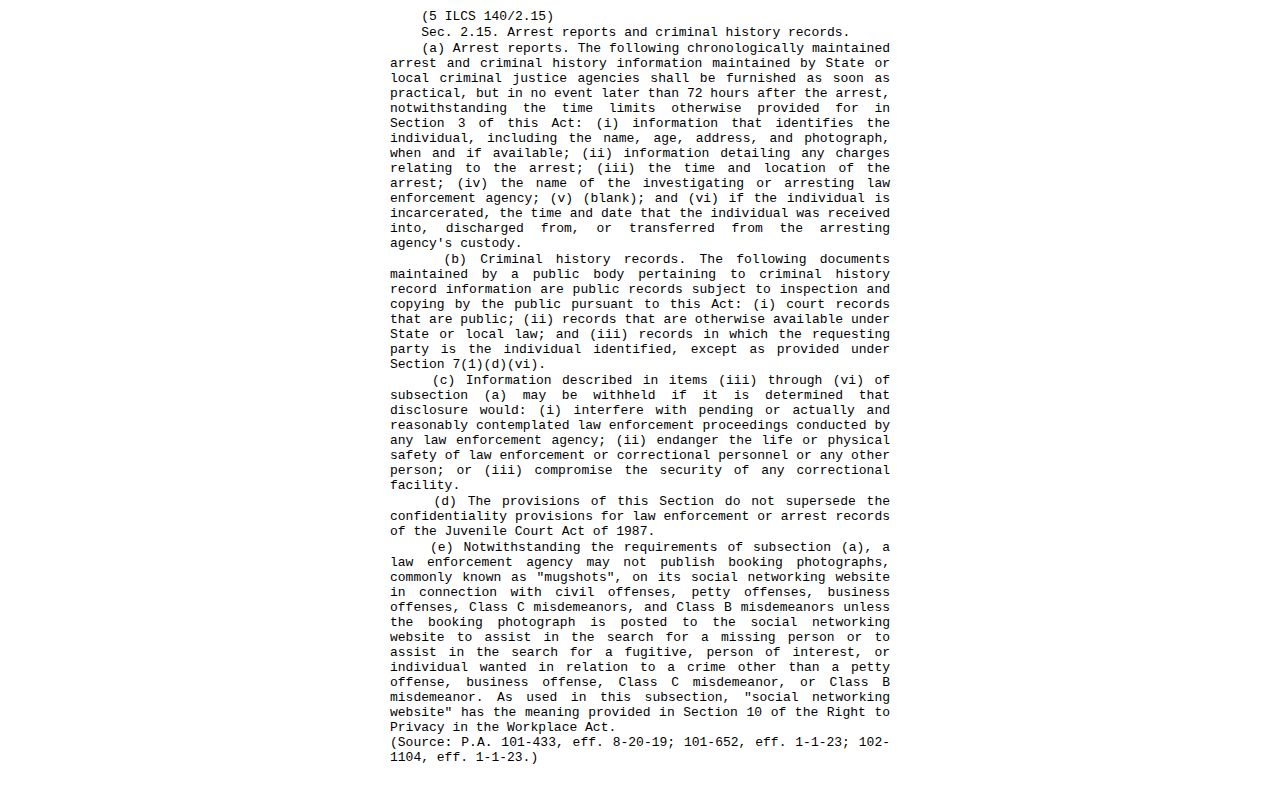
Fields differ by source. Compare the record date and agency before treating two entries as one event.
How to Request Illinois Arrest Records
A public web page is only one route to a booking. Maybe the photo is missing, has rolled off, or the person was released. Ask the office that holds the record. The sheriff or jail keeps the booking sheet and intake image. The arresting agency holds its report. Send a focused written request. Avoid asking for a statewide list that no office maintains.
An Illinois FOIA request works best when it names the record and the agency. Add enough date or case detail to find it. Ask for electronic delivery too. The normal response period for a noncommercial request runs five business days. A written extension is possible. Commercial requests fall under a separate 21-business-day clock. Copy fees vary by record and format, so request a cost estimate up front. An office may withhold or redact material under a statutory exception. But it should say which one.
- Identify the arresting police agency and the county facility that received the person.
- Ask each custodian for the specific existing item it holds, such as the incident report, booking sheet, or booking photo.
- Include the known name, event date, location, case number, or booking identifier to narrow the search.
- Request an electronic copy and a fee estimate, then keep the response and any redaction notice.
ISP runs its own FOIA path for reports, recordings, and related files. The process demands a specific record, warns against "any and all" phrasing, and quotes no universal price or delivery time. The Illinois State Police arrest page covers both the report path and the booking handoff.
Illinois Arrest Feeds and Rosters
Illinois counties run their arrest feeds on very different clocks. Some are live custody lookups. Others post one daily booking report. A few publish no roster at all. Adams County posts a morning snapshot daily. Champaign County's report spans the prior day into the morning. Cook County's locator warns of a booking-processing lag of roughly four to six hours. Chicago's city search covers only adult arrests handled by its police department. Not every Cook booking appears there. McHenry posts a timestamped, date-based report. St. Clair describes an hourly current-custody search with no bounded day window.
A "last 24 hours" label can mislead. A morning PDF may miss an arrest made after its cutoff, and someone can be released or moved before a custody page loads. The same-day page compares the true windows, and the multi-day Illinois arrest log landscape separates bookings from dispatch data and news blotters.
| Official View | What It Can Show | Limit to Keep in Mind |
|---|---|---|
| Current county custody search | A person currently listed at one jail, sometimes with a booking number, status, or photo. | May drop an entry after release and may not give an arrest date window. |
| Daily booking report | Bookings in a stated prior-day or morning interval, with local fields such as agency, charge, bond, or image. | Cutoff time and archive depth vary. It is not a live statewide total. |
| Municipal adult-arrest search | Arrests handled by that police department, with date, location, charge, and release fields where published. | Does not cover every arrest in the surrounding county. |
| Dispatch or call log | Calls for service or agency activity over a set period. | A call record is not proof of an arrest or booking. |
Start with the county where the person was taken, not just the city where police made the arrest. Enter the exact name. Add any booking number the local site accepts. Read the status, date, and "last updated" label. If the person is absent, call the receiving facility or its records unit for the booking record. A roster signals current custody, not a full history.
The 24 Hour Arrests page maps each same-day view and its lag. Its tables separate Adams and Champaign report windows from Cook's current locator and St. Clair's hourly roster.
After an Illinois Arrest
Custody status changes fast after an arrest. A person can be booked, released, transferred, or later sentenced to state custody. Each step leaves a different record. One person may cross several systems, so a live page can be accurate for its moment yet incomplete as a timeline.
| Record Layer | Fields It May Show | What It Does Not Prove |
|---|---|---|
| County booking | Name, booking ID, date, alleged charge, bond or status, and photo when the county publishes those fields. | That the person remains in custody or that a charge led to conviction. |
| Arresting agency | Arrest time and place, responsible agency, incident details, report number, and any releasable narrative. | That the person was booked at the same agency or facility. |
| IDOC custody profile | Name, IDOC number, parent institution, current location or status, vital statistics, admission or release dates, and sentence data. | A new county arrest or a completed sentence. IDOC says completed sentences are not displayed. |
IDOC's Offender Search covers people currently incarcerated or on parole. Current profiles may include a photo. Former-person photos stay confidential under the agency's FAQ. Completed sentences are not shown. A historical IDOC record must be requested from the department. That search sits apart from a county booking lookup. A state-prison result signals post-sentencing custody. It does not mean IDOC holds a new arrest report.
Arraignment is an early court hearing where a judge addresses the charge and release conditions. Bond is a court-ordered amount or condition tied to release, while disposition means the case's outcome, such as dismissal or conviction. Expungement removes eligible records from public access by court order; sealing restricts access under state law.
Illinois Mugshots and Booking Photos
Illinois has no statewide booking-photo roster. Photo publication is a local matter. Adams and Champaign reports carry image fields. Cook County and Chicago police views can expose photos. McHenry snapshots have shown images. St. Clair's search description sets no photo policy. Other counties list no public photo interface. Even where a field exists, it can sit blank for one record or vanish from the live view when custody changes.
Section 2.15 of the Illinois FOIA says a photograph is furnished "when and if available." It does not require each county to post photos. The separate restriction on certain law-enforcement social-network posts is narrower than a ban on public records. Turn to the official jail or arresting-agency page for an image. Read the charge and later court status there too.
The RecentlyBooked Illinois section shows how a private index groups selected counties. Its page describes a past-30-day scope. Coverage is selective, and it is not an official statewide roster.
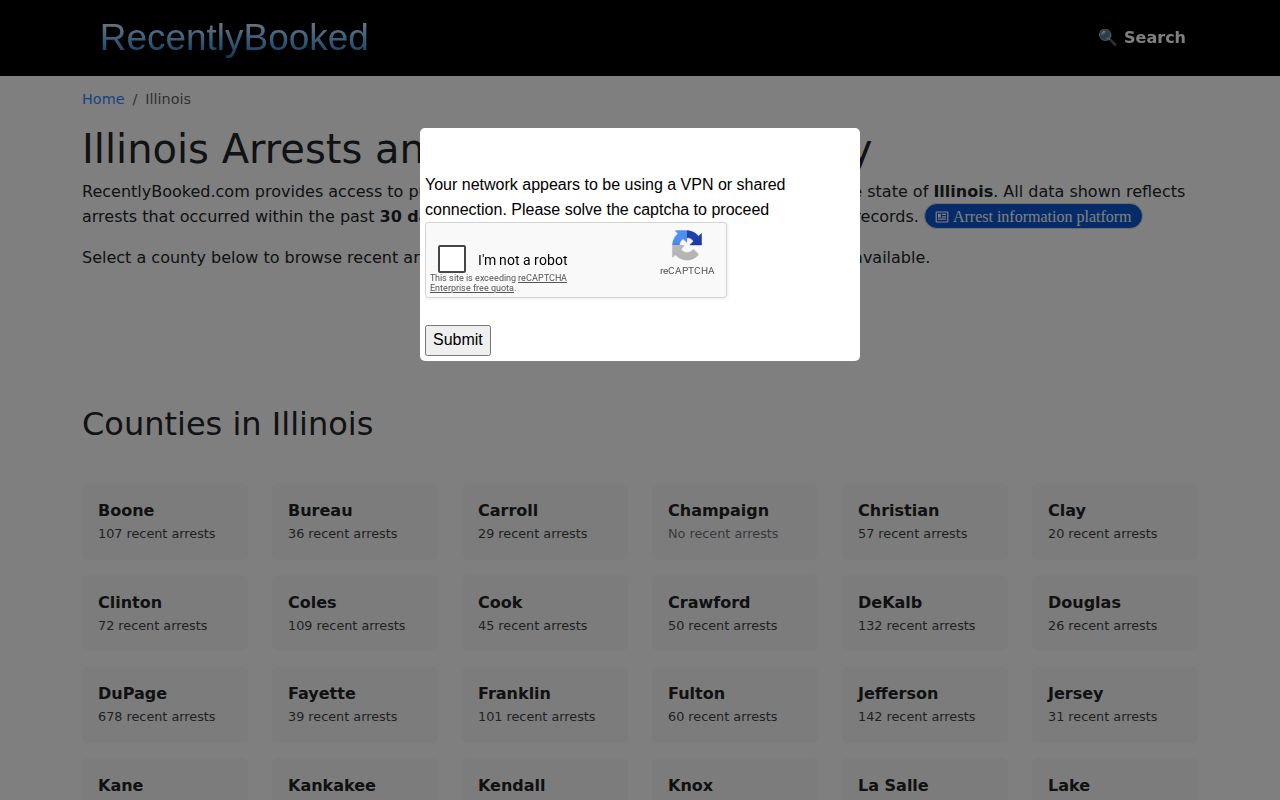
Verify any name, date, charge, or custody status with the county or agency listed as the original source before trusting a secondary page. Secondary pages drift. The Mugshots.com Illinois archive can preserve older records. An old item there does not show that a person is still in county custody.
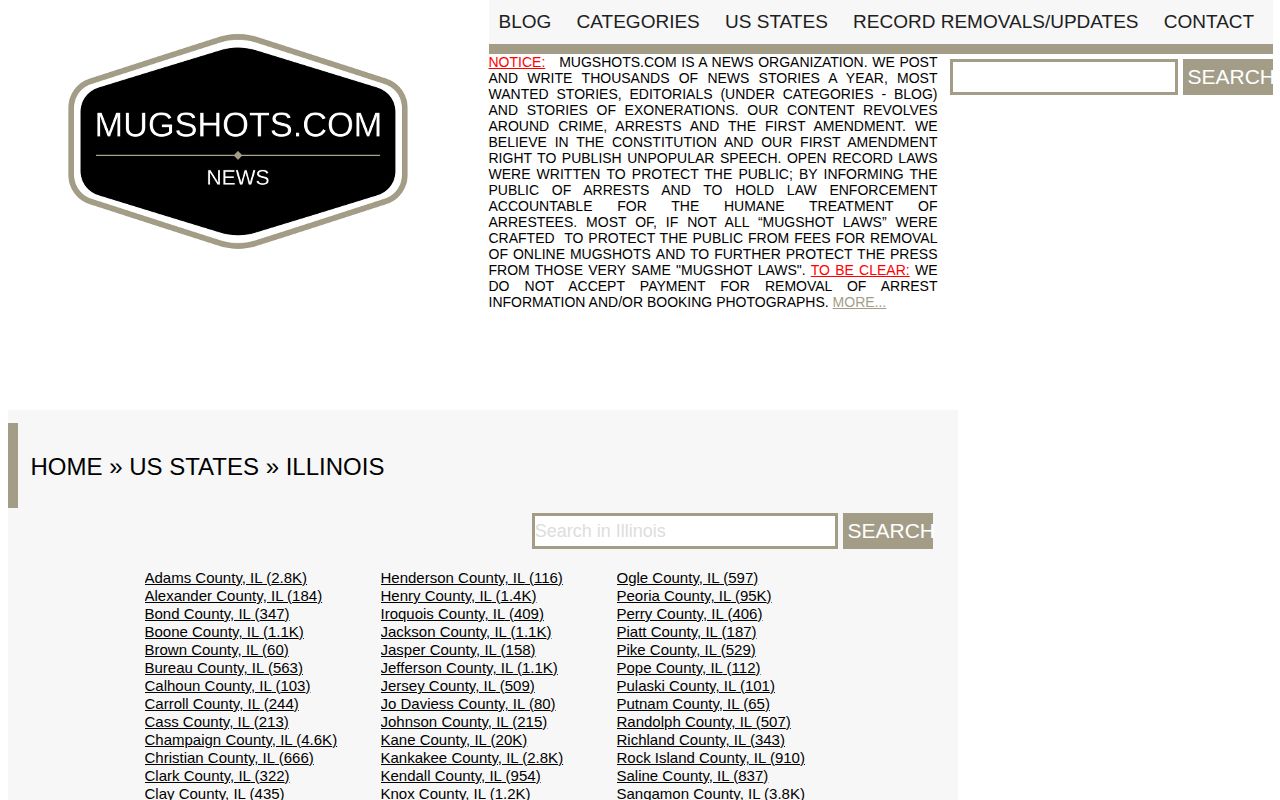
News outlets publish selected arrest and court stories. An article is an editorial account with its own correction practices, not a booking list.
Arrests.org Illinois offers a searchable feed with county links. Its coverage reaches only part of the state. The disclaimer makes no accuracy claim. It points to a county clerk or State's Attorney for facts. So confirm any result with the county or agency itself.
Illinois Arrest Photo Rules
Illinois also regulates private sites that post criminal-record details. One law targets paid removals. Section 2QQQ of the Consumer Fraud and Deceptive Business Practices Act, 815 ILCS 505/2QQQ, makes it unlawful to take a fee or other consideration for removing, correcting, or withholding covered information. The definition covers arrest descriptions, charges and dispositions, booking photographs, and identifying details.
Covered publishers that charge face a tight clock. An error must be fixed within five business days after the subject or a representative sends a certified letter with supporting documents. A person injured by a violation may claim $100 per day plus attorney fees. The penalty is real. The statute carves out exceptions, including news media and certain creative works. So it is no blanket erasure order. It does not touch every arrest story or copy. Sealing and expungement still run through the courts. For the exact wording, the current Section 2QQQ text controls.
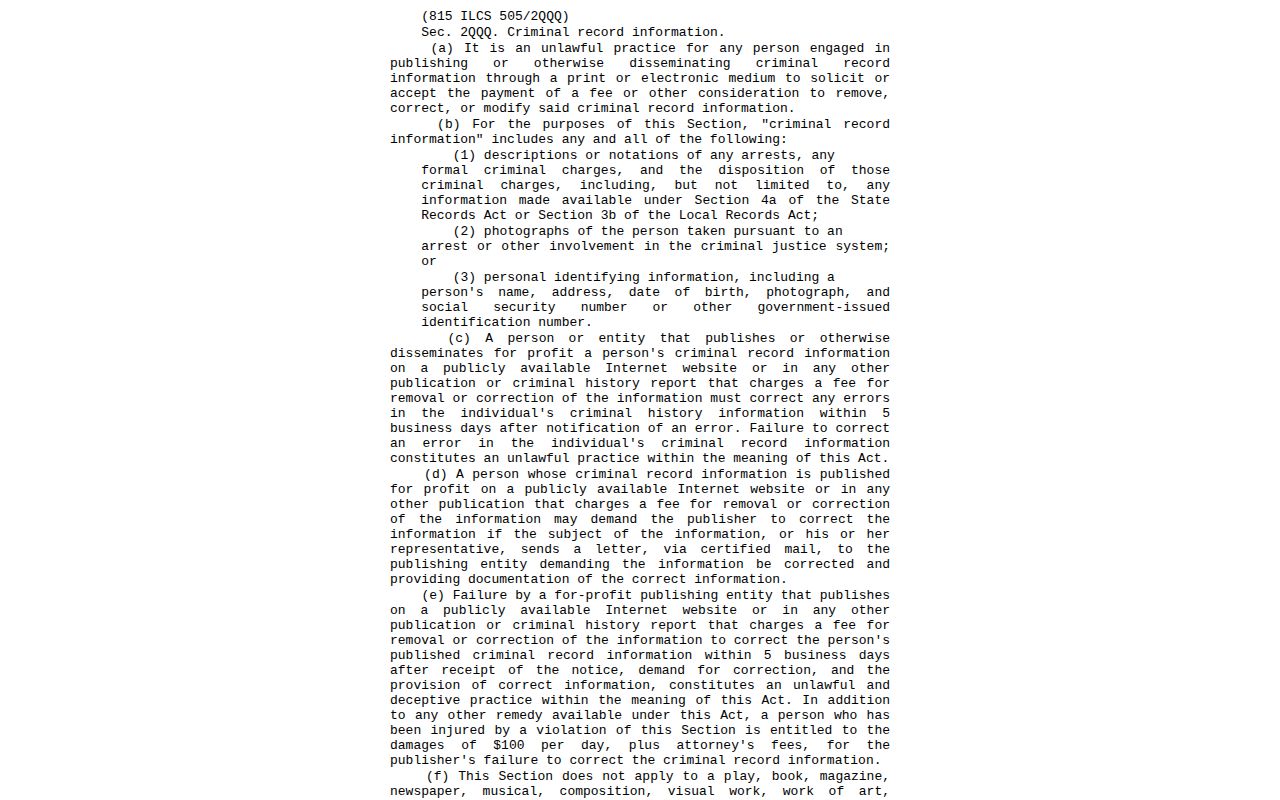
The Illinois statute sets a scope. It does not promise that a private site will drop a record outside the covered circumstances.
Several commercial indexes carry Illinois entries. Busted Newspaper's Illinois section is one, and it works as a selective county-based index rather than a complete state count. RecentlyBooked says its Illinois page covers a prior 30-day period, but the counties shown are selective too. Their correction terms differ. The separate law guide explains the free routes and how to document a request.
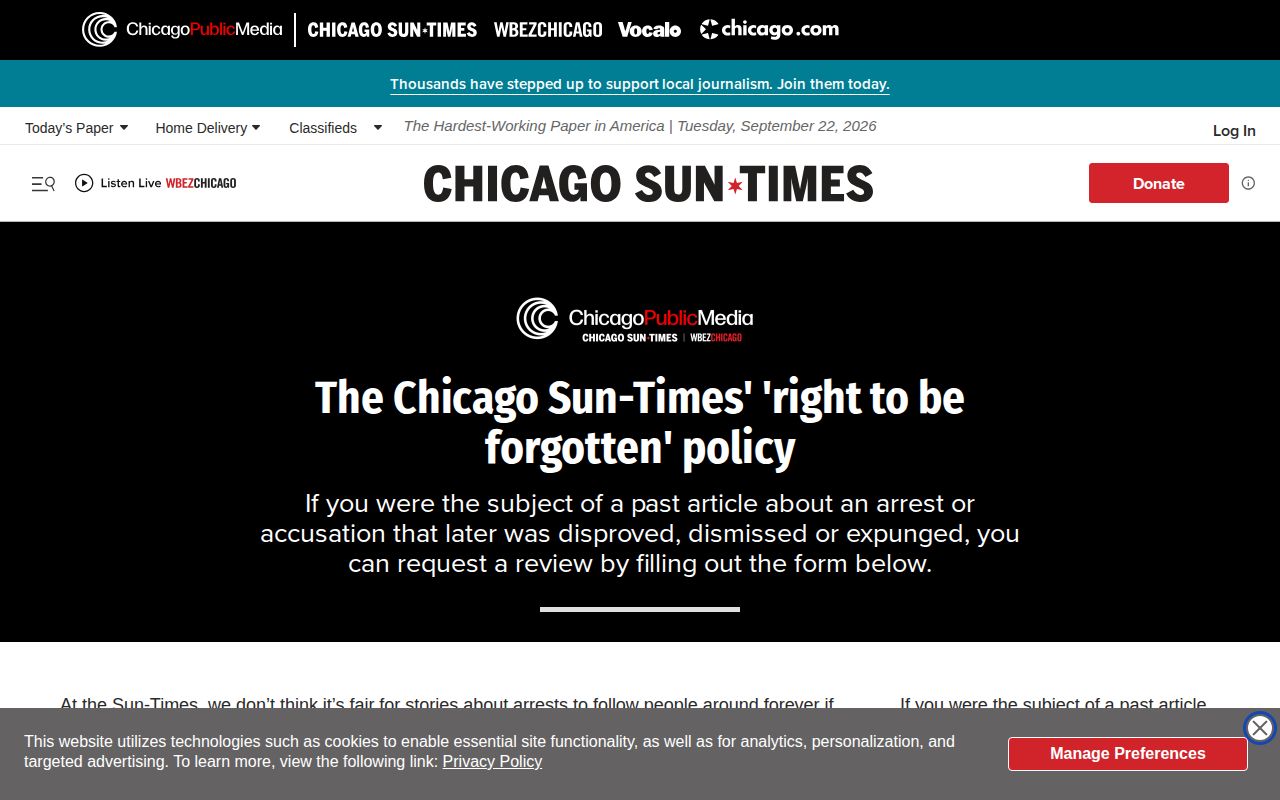
News publishers work differently from a booking index. They use editorial review. The Chicago Sun-Times review policy describes a free request process for certain older coverage, but each outcome is a newsroom decision, not an automatic deletion.
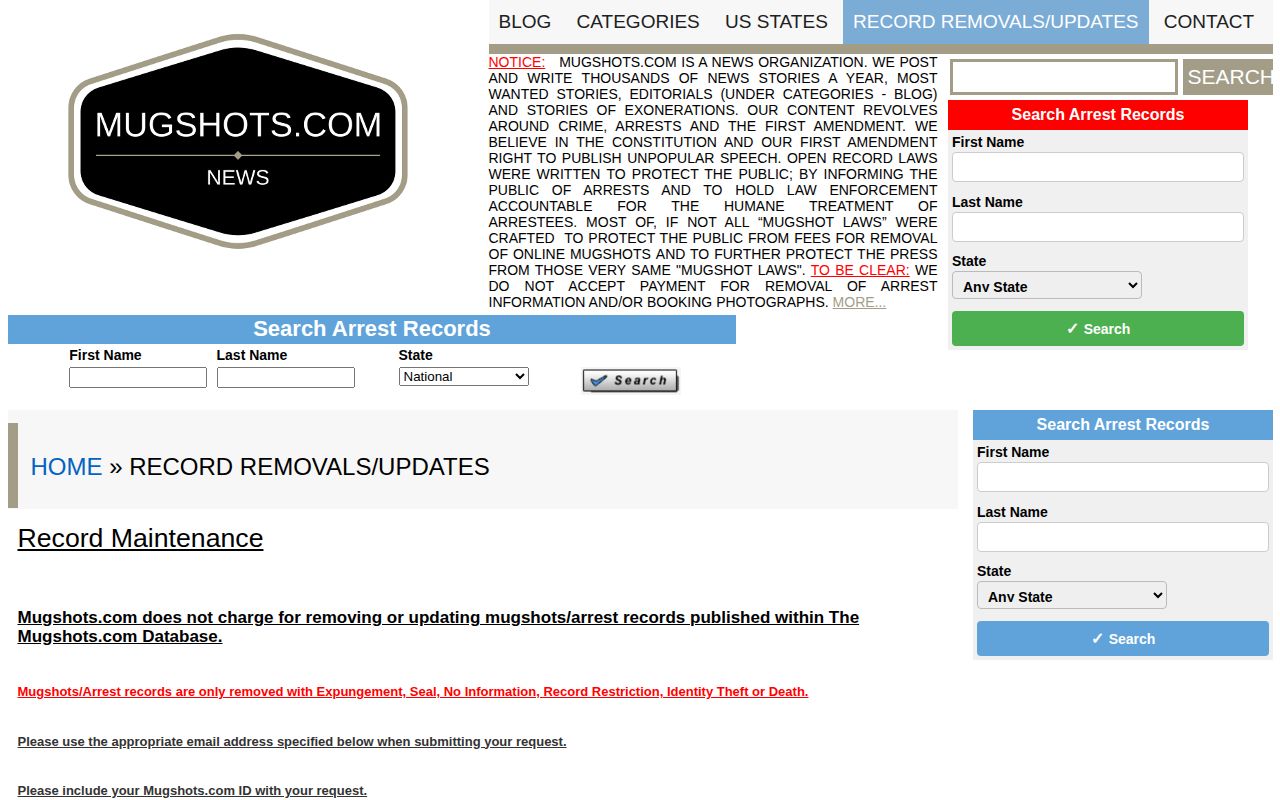
Keep the agency record handy. Attach any court order too. A publisher's review is separate from the custodian's change. Mugshots.com describes a no-fee record-maintenance process for documentation of an expungement, sealing, or favorable disposition. Its policy page says processing can take up to ten business days and is not guaranteed to be timely.
An approved request changes only the publisher's copy. It does not update the county jail, the circuit clerk, or a separate search index. Illinois has no statewide section on Mugshots.zone. A Chicago subdomain does publish a free request form, but that local form is not a statewide process for other pages.
A request may bring review, an update, or no change at all. Never pay anyone who promises to erase every copy of an arrest record from the internet.
Illinois Warrants and Wanted Lists
Illinois has no single public warrant page. None covers every county, city agency, state fugitive case, and federal warrant. A county sheriff may post wanted notices. The arresting agency may name a person in an official release. ISP accepts tips about criminal activity and wanted people. U.S. Marshals districts and fugitive task forces handle federal cases across defined areas. These lists are selective and can change without notice, so check the issuing agency or court before treating an entry as current.
A warrant is court authority to arrest or search. One county may issue it; another may serve it. A person can be held on a warrant, a new charge, or a transfer request. Those custody states may appear in different systems. Contact the sheriff or circuit clerk to check a possible warrant. A lawyer can verify the court record.
Statewide and federal routes exist. The ISP confidential tips portal accepts wanted-person information but is not for emergencies. ISP publishes no public statewide wanted-person roster. The U.S. Marshals Service splits Illinois work among northern, central, and southern districts. Its Central District page is one contact route. A posted notice is a lead from the named agency.
Never approach, follow, or confront anyone named in a wanted notice. For immediate danger call 911; for other information use the agency's official contact or tip route.
A missing name proves nothing. Online lists can be incomplete or withheld. An old notice may already have been resolved. Confirm directly with the court or agency, and preserve the date of the source you checked.
From Booking to Court and Custody
A booking entry only starts the paper trail. What follows happens in other offices. A prosecutor files charges, a judge sets release terms, and a person may walk out of the county jail long before any docket search. No single office keeps the whole file. The arrest report, booking record, charging instrument, court docket, and final disposition each sit with a different custodian. Match names, dates, county, and case numbers before treating two similar entries as one event.
Illinois runs circuit courts in every county. Online access is not one statewide docket, though. The Illinois Courts site points visitors toward circuit-court information. Some clerks build their own case search, while some public search services include only the courts that choose to participate. Sealed matters, juvenile cases, and records outside a portal's participating list may not show up. An empty result is not the end. Find the county and circuit, ask the clerk how the public index is organized, and check for a different spelling or case number.
Custody can move a record beyond the county jail. The Illinois Department of Corrections (IDOC) search tracks current incarceration and parole, not arrests statewide. A live profile lists the IDOC number, institution, status, dates, sentence details, and a photograph. Finished sentences drop out of the public search. IDOC treats former-person photos as confidential, and its archived-record path sits apart from the live lookup. Someone arrested and released, or whose case ended without prison, may never appear there at all.
Federal custody works by its own rules. The Federal Bureau of Prisons (BOP) locator finds people in federal prison or custody records within its scope. It shows no booking photographs. It can't replace a county jail search. The U.S. Marshals Service may hold a person before transfer, and immigration detention runs through the separate ICE detainee locator. Neither federal tool merges Illinois county bookings. Check the county first. One system's record says little about another.
The official BOP interface shows the narrower federal custody search and its record fields.
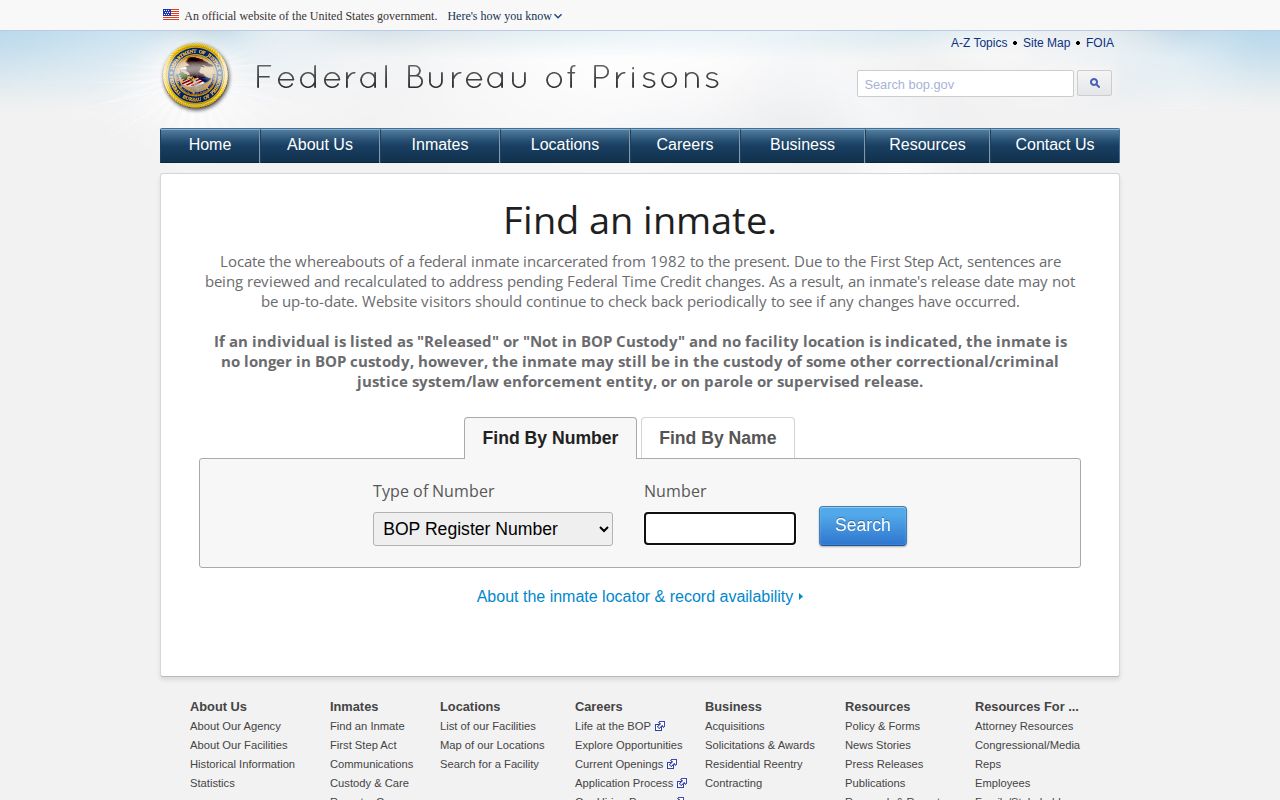
The locator covers only the federal population it holds. It displays no booking photograph and no history of local arrests.
For a case's final outcome, follow the court record itself. Booking entries and custody searches tell only part of the story.
Historical Records and Local Retention
A roster entry vanishing from a website tells you one thing only. The page changed. The arrest report, booking sheet, dispatch log, or mugshot may still sit in the agency's files untouched. Illinois sets no single statewide rule for how long each county keeps a booking photo online. The official copy follows the agency's records schedule and its approved disposition authority. The web page itself may refresh on a totally different timeline, so treat the two as separate things.
Older material lives elsewhere. The Illinois State Archives and its regional depositories keep selected series, not every county's modern jail database. The State Archives holdings and research page is the natural first stop. Learn which collections survive and where they sit. Some records sit in regional depositories. Through the Illinois Regional Archives Depository program, county jail registers, criminal court files, and related local records are available. An old sheriff register might list a name, age, physical description, commitment reason, offense, and release details. That is a logbook, not a modern booking-photo archive.
Correctional records are historical too, with clear limits. Prisoner registers survive for Alton, Joliet, and Stateville, including an early Joliet series from the nineteenth century. Digitized collections can be searched by name or collection title. But an index may cover only certain years or institutions. Before trusting a search box, note its scope. Record the collection name, the date range, and the institution. Know whether you are viewing an index entry or an original register page.
A sharp request gets better results. Give archival staff a name, a likely county or institution, an approximate year, and the record type you want. Illinois residents can submit a limited number of specific names through the Archives' online reference-request route. Out-of-state requests follow a different fee rule. Copy, certification, microfilm, and research costs vary by service. Confirm the current fee schedule before you pay. If a collection is not digitized, plan on a visit in person or to a regional repository.
Local agencies cannot destroy public records just because a page grew old. The Local Records Commission approves retention schedules and every disposition of local public records. Ask the sheriff, police department, jail, or clerk which schedule covers the record type you care about. Ask whether an authorized destruction certificate exists. Arrest reports, booking images, jail-management files, dispatch calls, and the online copy can each have a different custodian. Retention periods can differ too.
Sealing or expungement works differently. A court order reaches the official records named in the law. It may not touch everything. An independent publisher's copy, a cached news story, or an old screenshot can survive. Keep the order and each custodian's response. Then pursue every remaining copy through its own correction process. Access to historical records can also be limited. Age, juvenile confidentiality, sealed status, or collection condition can each play a part.